
When shopping for the perfect engagement ring or a dazzling piece of jewellery, two terms are stealing the spotlight for their ethical and affordable allure: moissanite diamond and lab grown diamonds. These brilliant alternatives to traditional mined diamonds are not only visually stunning but also environmentally friendly, conflict-free, and budget-conscious—qualities that are driving a significant shift in how people approach luxury.
Table of Contents
What Is a Moissanite Diamond?
Let’s start by clearing up a common misconception: moissanite diamond is not a true diamond. Instead, it is a gemstone made from silicon carbide, originally discovered in a meteor crater by French scientist Henri Moissan in 1893. Because natural moissanite is extremely rare, all moissanite used in jewellery today is lab-created.
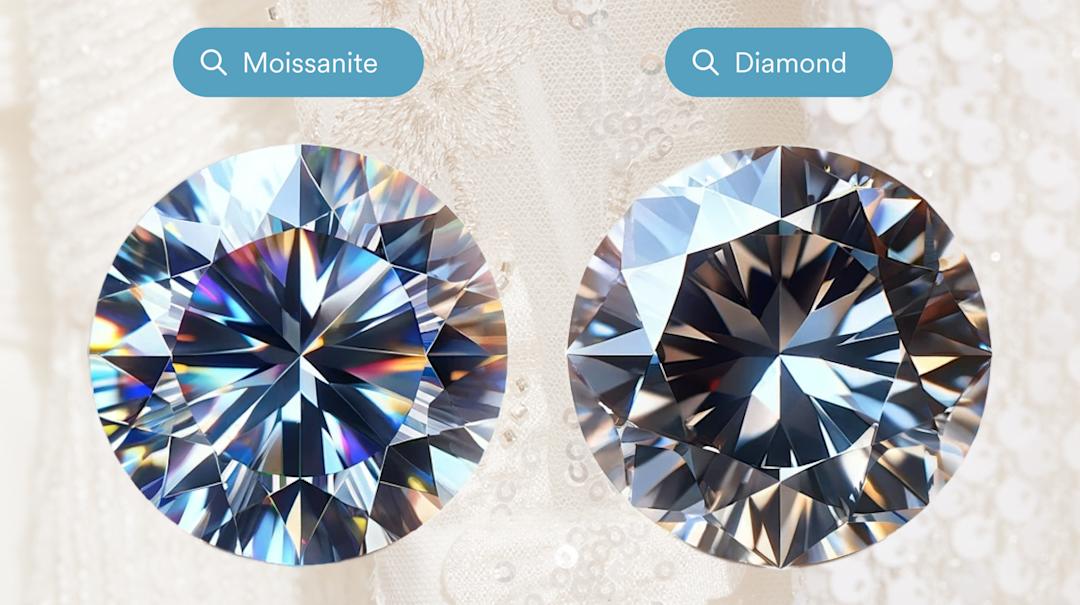
Despite its different chemical composition, moissanite exhibits remarkable brilliance and fire, often outshining diamonds in terms of sparkle. Its refractive index (2.65–2.69) is higher than that of diamonds (2.42), giving moissanite its signature rainbow flashes that many find irresistible.
What Are Lab Grown Diamonds?
On the other hand, lab grown diamonds are genuine diamonds that are chemically, physically, and optically identical to mined diamonds. They are grown in controlled environments using advanced technologies such as High Pressure High Temperature (HPHT) or Chemical Vapor Deposition (CVD), mimicking the natural conditions under which diamonds form in the earth’s crust.
These diamonds have the same carbon crystal structure as mined diamonds, and even experts often need specialized equipment to tell the difference. They are real diamonds—just created more responsibly.
Appearance: Sparkle & Shine
Both stones are breathtaking, but they shine in different ways. A moissanite diamond tends to emit more rainbow-like flashes, which can be both a pro and a con. Some love the extra sparkle, while others prefer the more traditional, white-light brilliance of a diamond.
Lab grown diamonds reflect light the same way as natural diamonds, with a balance of brilliance (white light), fire (colored light), and scintillation (sparkle when moving). This makes them ideal for those seeking an authentic diamond look without the ethical baggage.
Durability: Built to Last
If you’re concerned about daily wear, both stones hold up well, but lab grown diamonds have a slight edge. Scoring a perfect 10 on the Mohs hardness scale, they are the hardest known natural material, making them extremely scratch-resistant.
Moissanite, while very durable at 9.25 on the Mohs scale, can still be scratched or damaged under extreme conditions. However, it’s perfectly suitable for daily wear in rings, earrings, and pendants.
Cost Comparison: Luxury on a Budget
For those on a tight budget, a moissanite diamond is often the go-to choice. It can cost up to 90% less than a mined diamond and about 50–70% less than a lab grown diamond of similar size and appearance. This price advantage allows you to buy a larger stone or higher-end setting without breaking the bank.
Lab grown diamonds, while more expensive than moissanite, are still 30–40% cheaper than mined diamonds. They offer the best of both worlds: the prestige and authenticity of a diamond without the hefty price tag or ethical concerns.
Ethical and Environmental Impact
Both stones shine brightly in terms of sustainability and ethics.
-
Moissanite diamonds are created entirely in labs, requiring minimal environmental disruption.
-
Lab grown diamonds also leave a significantly smaller carbon footprint than mined diamonds, which often involve habitat destruction, child labour, and water pollution.
Consumers who care about their environmental impact will find either choice far superior to traditionally mined diamonds.
Certification and Resale Value
Lab grown diamonds are typically certified by reputable institutions such as GIA, IGI, and GCAL, just like mined diamonds. This certification includes details on cut, clarity, colour, and carat, which helps with resale and insurance.
In contrast, moissanite diamonds are usually sold with brand-specific grading and don’t have universally accepted certification. Also, resale value is lower for both moissanite and lab grown diamonds compared to mined diamonds, but the gap is closing as public awareness increases.
Choosing the Right Gem for You
So how do you choose between moissanite diamond and lab grown diamonds?
Choose Moissanite If:
-
You want the maximum sparkle for your budget.
-
You’re okay with a diamond lookalike that’s not chemically identical.
-
You’re seeking a larger stone at a lower cost.
Choose Lab Grown Diamonds If:
-
You want a real diamond with the same chemical makeup as mined stones.
-
You prefer the classic diamond sparkle over moissanite’s rainbow fire.
-
Certification and long-term value matter to you.
The Cultural Shift Toward Ethical Luxury
Today’s shoppers are savvier, more conscious, and highly values-driven. Millennials and Gen Z consumers are actively choosing moissanite diamond and lab grown diamonds over mined diamonds because of their ethical sourcing, environmental benefits, and affordability.
Jewellery brands are responding by expanding their offerings in these categories, and major retailers are dedicating entire collections to lab grown and moissanite options. Even engagement ring traditions are evolving, with couples opting for gemstones that reflect their shared values and modern lifestyles.
Final Thoughts: Brilliance Beyond Convention
Whether you gravitate toward the shimmering fire of a moissanite diamond or the timeless authenticity of lab grown diamonds, you’re making a choice that’s better for the planet, people, and your pocketbook. Both offer stunning beauty without compromise—proof that luxury doesn’t have to come at an ethical cost.
In a world where conscious consumerism is rising, these sparkling alternatives are more than just trends—they’re a new standard.


